The Wet Tuesday Test: Reading Flood Risk Before You Offer
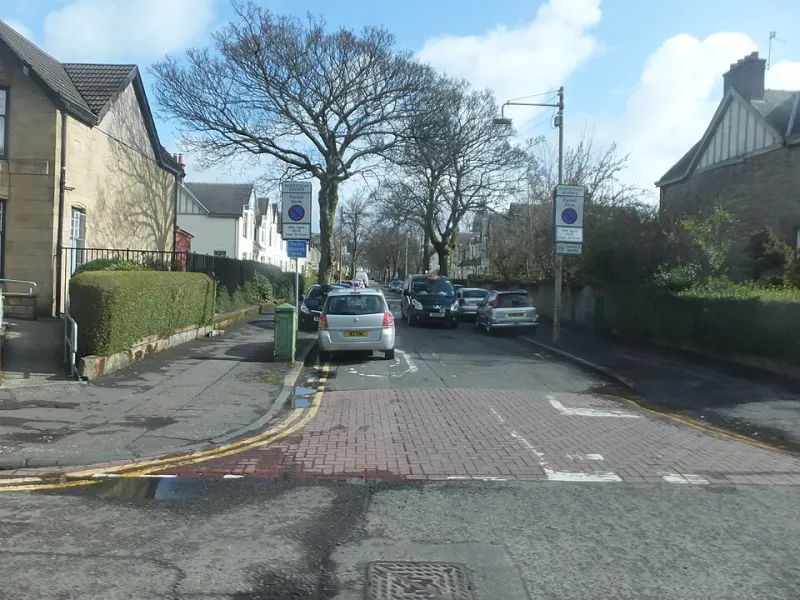
Photo: Barbara Carr , CC BY-SA 2.0, via Wikimedia Commons
Buying a house in the UK has always involved a bit of weather-related faith. You view on a bright Saturday, the garden looks lovely, the patio is dry, and nobody mentions the stream at the bottom of the road. Then you move in, winter arrives, and the pavement outside starts doing an impression of a shallow swimming pool.
Flood risk is one of those things buyers are vaguely aware of but often check too late. In 2026, with insurers tightening their questions and lenders paying closer attention to environmental searches, it is worth doing the homework before you offer, not after your solicitor sends a report with a few yellow flags.
This is not about ruling out every house near water. It is about knowing what you are taking on.
Start With the Map, Then Ask What It Leaves Out
The Environment Agency's flood risk checker is the obvious first stop for England, with equivalent services from SEPA in Scotland and NIEA in Northern Ireland. Pop in the postcode and you will get a picture of river, sea, surface-water and reservoir risk. It is free, quick and useful. It is also not a property survey.
The maps are indicative. They show broad zones, not the exact behaviour of water around a particular driveway, air brick or cellar. Surface-water mapping is especially patchy because it depends on drainage capacity, local topography and where rainwater actually wants to go. A map might show the end of the street as medium risk while the house itself sits on a slight rise. Equally, a property shown as low risk can still have a soggy corner where a gully is blocked and the patio falls the wrong way.
So use the map as a prompt, not a verdict. Note the risk level, check whether the property sits in a flood zone, and look at the nearby watercourses. Then start asking more specific questions.
The Questions Sellers Hope You Will Not Ask
The TA6 property information form should include flood questions, including whether the property has flooded, whether it has been subject to insurance claims and whether any remedial work has been done. Read it carefully. A blank answer is not the same as a reassuring one.
Ask the seller directly: has any part of the property flooded, inside or out? When was it? How deep did the water get? Was it river water, surface water or a backed-up drain? Has any insurance claim been made? Have any flood defences, pumps or non-return valves been installed? Has the property ever been refused insurance?
If the seller has lived there for years, ask what the road is like after heavy rain. Ask about the drains at the front, the soakaway in the garden, the cellar steps, the garage floor. Neighbours are often more candid than sellers, and a quick chat over the fence can tell you more than a glossy brochure.
Look for clues on the viewing. Water marks on brickwork, tide lines in a cellar, fresh plaster in a low corner, a musty smell in a downstairs room, or a patio that slopes towards the house are all worth mentioning. None of them prove a flood, but they are good reasons to ask.
Your Solicitor's Search Is Not a Formality
A drainage and water search, usually the CON29DW, is part of the standard conveyancing pack. It can reveal whether the property is connected to mains drainage, whether there are public sewers nearby and whether there have been drainage issues. An environmental search will also flag flood risk and other land-use matters.
Ask your solicitor to check local authority records for flood grants, planning permissions nearby and any known drainage problems. New development up the road can change how water runs off. A new car park or extension can send surface water somewhere it did not used to go. It is not always a deal-breaker, but it is part of the picture.
If the searches throw up something, do not panic and do not ignore it. Ask what it means in practice. A flood risk assessment, a specialist report or a conversation with the local drainage team may be sensible.
Insurance and Lending: The Quiet Gatekeepers
Even if you are comfortable with the risk, your mortgage lender and insurer might have opinions. Lenders rely on valuations and environmental data, and a valuer may flag a property in a higher-risk area. That can mean additional checks, a specialist report or, in some cases, a declined application.
Insurance is the other practical hurdle. Flood Re has helped many homeowners in eligible properties, but it is not a blanket solution and it does not cover every scenario. Get an indicative buildings insurance quote before you exchange, not after. A broker can be useful here, especially if the property has a history of flooding or sits close to a watercourse. The difference between a normal premium and a loaded one can affect your monthly budget more than you expect.
Why a Wet Day Is Your Friend
If you can, view the property during heavy rain. It is the most honest test going. You will see where water pools on the road, whether the drains are coping, whether gutters overflow and whether the garden turns into a bog. You will also see how the house itself behaves: damp patches, leaking gutters, water running towards the back door.
A dry viewing is not useless, but it is incomplete. If the weather has been kind, ask the agent whether you can return after a wet spell. Take photos. Look at the direction of slopes, the height of the door thresholds and the condition of any flood defences. Ask yourself whether you would be comfortable living there in a bad winter, and whether the price reflects the risk.
The Bottom Line
Flood risk is not a simple yes or no. A house near a river can be perfectly dry, while a house on a hill can have a drainage problem. The point is to go in with your eyes open. Check the maps, ask the awkward questions, read the searches and get an insurance quote. If the property is right and the risk is manageable, you can budget for resilience measures. If the answers are vague, or the numbers do not stack up, walk away.
Here at Harrisons Residential, we would rather buyers ask the wet-weather question before they fall in love with a kitchen. It is much easier to have that conversation now than to have it with a loss adjuster in February.