The Pre-Mortem Survey: Walking Your Own House Before a Buyer Does

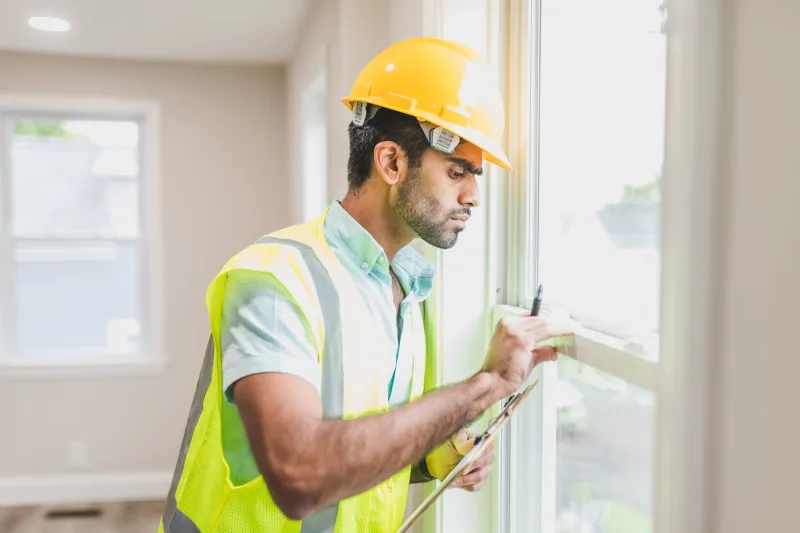
Photo: UK surveyor inspecting house exterior roof gutters clipboard, via as2.ftcdn.net
There is a particular kind of silence that follows a buyer’s survey landing in your inbox. It is not quite shock and not quite anger — more the feeling of being told about a leak in your own house by a stranger who has owned it for forty-five minutes. Most sellers wait for that moment. A smarter approach is to get there first.
A pre-sale survey is not about turning your home into a building site or pretending it is something it is not. It is about walking the property with the same questions a buyer’s surveyor will ask, finding the awkward stuff early, and deciding what to do about it while you are still in control of the timetable.
Start with the rooms you avoid
Every homeowner has a room they close the door on. Start there. Look up at ceilings for staining, especially under bathrooms and around chimneys. Check window seals for condensation between the panes. Run a hand along skirting boards in external corners. Open the cupboard under the sink and actually look at the back panel. Shine a torch into the loft hatch, even if you only stand on a step ladder and point it around.
You are not trying to diagnose structural movement with a phone torch. You are looking for the obvious things a surveyor will note: damp patches, cracked render, sticking doors, a radiator that has been painted over rather than repaired. Smell matters too. Damp has a particular mustiness that noses notice before eyes do.
The outside bits buyers pay surveyors to poke
Stand across the road and look at your roof. You are checking for slipped tiles, sagging lines and blocked gutters, not conducting a drone inspection. Binoculars are allowed and less eccentric than they sound. Check downpipes for stains that suggest overflow, and look at the pointing around windows and doors. Walk the boundary and note fence panels that are leaning, retaining walls that have moved, and drains that smell or sit lower than the paving.
If you have an extension, conservatory or loft conversion, dig out the paperwork now. Building regulations completion certificates, guarantees and details of who did the work are worth more than a fresh coat of paint when a buyer’s solicitor starts asking questions. The same goes for boiler servicing, electrical certificates and any damp-proofing warranty. If you cannot find them, say so early rather than hoping nobody asks.
What to commission — and what to skip
A full building survey on a modern flat is usually overkill. A Victorian semi with a dodgy-looking roof is a different matter. Ask a local surveyor for a pre-sale condition report rather than a mortgage valuation. You want a practical list of defects and likely costs, not a number for the lender.
For many homes, a targeted inspection is enough: a damp and timber specialist, an electrician to check an old consumer unit, or a roofer to look at a valley that has stained the ceiling. Expect to pay a few hundred pounds rather than a few thousand. That is often less than the reduction a buyer will ask for once their own surveyor has used the phrase ‘further investigation’.
Fix, price, or disclose
Once you have a list, put every item into one of three buckets. Fix it if it is small, cheap and likely to scare a buyer disproportionately: a dripping tap, a broken extractor fan, a missing roof tile, a gutter that has not been cleared since the last storm. Price it if it is genuinely expensive — a roof, widespread damp, old wiring — and adjust your asking price before launch rather than after a survey. Disclose it if it is known and unlikely to be fixed quickly. The TA6 property information form is not a place for optimism; it is a place for accuracy.
What you should not do is cover it up. A fresh coat of paint over a damp patch is not a repair, and surveyors are not easily fooled by a neatly painted skirting board. Buyers talk to each other, and surveyors talk to buyers.
Use the findings before the board goes up
A pre-sale report gives you a script. If a buyer’s survey later flags the same gutter or roof valley, you can say, without panic, that it was identified before launch and the asking price reflects it. You may even have a quote or a receipt. That is a far better conversation than a standoff two weeks before exchange.
It also helps you brief your estate agent properly. At Harrisons Residential, the smoothest sales are rarely the ones with no issues at all. They are the ones where the seller knows what the issues are and has decided how to handle them. Buyers can smell uncertainty. They are much calmer when you sound like you have already done the homework.
Keep a sense of proportion
A pre-sale survey is not a guarantee that the buyer’s survey will be clean, and it is not a licence to renovate the house from top to bottom. Every older home has a list. The aim is to remove the surprises that cost you money or momentum, not to achieve a perfect report that does not exist.
In a 2026 market where buyers are careful and lenders are thorough, being the first person to inspect your own house is a quiet advantage. Walk it with a torch, a notepad and a slightly cynical eye. Then call your agent and decide what, if anything, needs doing before someone else does it for you.