The Builder in the Hallway: Making Sense of a Tradesperson-Led Second Viewing
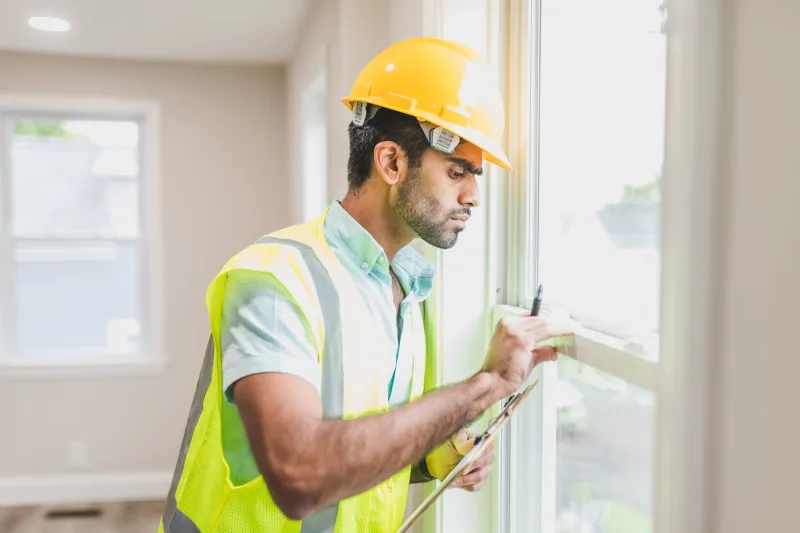
The first viewing is usually about whether someone can picture themselves in your house. The second viewing is often about whether their builder can picture the work. That can feel unnerving when a stranger in dusty boots starts tapping walls and peering into the loft, but it is rarely a hostile act. In most cases, it is a serious buyer doing informal homework before they spend money on surveys and legal fees.
At Harrisons Residential, we see this a lot. A buyer comes back with a parent, a friend, or more often a builder they trust. The trick for sellers is to treat it as a fact-finding visit, not an inspection, a negotiation, or a referendum on your home maintenance over the last decade.
What the builder is actually there for
A builder at a second viewing is not usually there to produce a formal quote. They are there to scan for risk. They will look at the things that are expensive to put right and hard to see under a fresh coat of paint: the roof, the loft, the walls, the damp patches, the boiler, the consumer unit, the drainage, the extension, the chimney, the lintel over the window, the general feel of the place.
They might ask how old the boiler is. They might lift a corner of carpet. They might shine a torch into a cupboard under the stairs. None of that means your house is falling down. It means they are doing the same mental arithmetic most buyers do, just with more knowledge and a torch.
It helps to remember that the builder is not the decision-maker. The buyer is. The builder is there to give a reality check on cost and hassle. Your job is not to win the builder over. Your job is to make the facts easy to find.
Make access easy, not theatrical
Before the viewing, clear the loft hatch, the boiler cupboard, the consumer unit, and any side gate or outbuilding the buyer might want to see. If there are service records, warranties, building regulations certificates, FENSA paperwork or Gas Safe documents, have them in a folder on the kitchen table. You do not need to stage a presentation. You just need to remove the friction.
Do not deep-clean the skirting boards for a builder. They are not looking at your housekeeping. They are looking at age, condition and evidence of movement. A bit of clutter in the hallway is fine. A blocked loft hatch is not.
If you know something is old, tired or due replacement, do not try to disguise it. A builder will spot a tired roof or an aging boiler anyway. What they dislike is a seller who seems to be hiding something. Plain facts land better than a performance.
What not to say
This is the part sellers often get wrong. In an effort to be helpful, they over-disclose. They say things like: 'We have never had damp, but the wall does feel a bit odd in winter.' Or: 'The extension was done years ago, I think it was signed off, but I would not swear to it.' Those comments may be honest, but they can create doubt where none existed.
Answer the questions you are asked. If you do not know, say you do not know and offer to find the paperwork. Do not speculate. Do not diagnose. Do not follow the builder around offering a running commentary on every room. Let the buyer and their tradesperson talk. Be nearby, be available, and be pleasant, but give them space.
If there is a known issue, such as a leak that has been repaired or a chimney that needs repointing, say so calmly and, if possible, point to the invoice or guarantee. A documented issue is much less frightening than a vague one.
The off-the-cuff estimate
At some point, the builder may say something like: 'That roof will want doing soon, probably ten grand.' Try not to hear that as a formal quote. It is a verbal worst-case, delivered in a hallway, without measurements, access or a proper look. It is useful for the buyer, but it is not a negotiation document.
Do not renegotiate on the spot. Do not panic and knock thousands off before the buyer has even made an offer. If you are asked directly, keep it simple: 'If there is a specific issue, I am happy to look at a written quote.' That is reasonable, calm and firm.
Later, if the buyer wants to revisit the price, ask for evidence. A surveyor's report, a written itemised quote, photos, or a clear explanation of the issue. A builder's passing comment is not enough on its own. A proper quote should separate repair from improvement and should say what is actually wrong, not just that it is 'a big job'.
If a renegotiation lands
A request to reduce the price is not automatically a crisis. Sometimes it is genuine. A survey may have found something you did not know about. A roof may be closer to replacement than you thought. A boiler may be on its last legs. In those cases, a sensible adjustment can keep a good sale alive.
But keep it grounded. Is the issue something the buyer could reasonably have seen? Is it already reflected in the asking price? Is it maintenance rather than a defect? A twenty-year-old boiler is not a hidden flaw; it is an old boiler. A leaking roof is a different matter. Get your own quote if you are unsure. Compare like with like. Do not accept a vague figure just because it was delivered with confidence.
Keep the visit in perspective
A second viewing with a builder is a sign of momentum. The buyer is serious enough to bring someone whose time costs money. Your house is not on trial. It is being checked over in the same way you might check over a car before buying it.
If you have maintained the property, kept the paperwork and can answer plainly, you are in a strong position. If there are issues, deal with them with evidence rather than emotion. The best second viewings are the boring ones: easy access, straight answers, and nobody trying to negotiate in the hallway.